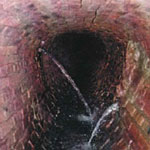
Some US sewage systems are more than 100 years old

FRONT PAGE
SiteSearch
About us
Directories

Obsolete urban infrastructure
US infrastructure problems
Gentrification of US cities
Revitalizing US cities
Rightsizing US cities
Key to rightsizing cities
USA: Livable communities
USA: Demolition as planning tool
America's megaregions
LA in real estate crisis
Urban ecological footprint
Demolition - New Orleans
Preserving modernist buildings
Politically neglected US cities
US affordable housing crisis
Cities' future
Urban sprawl - USA
Black American men in inner cities
US built environment in 2030
Urban traffic in the US
US community grant eliminated

City Mayors reports news from towns and cities around the world. Worldwide | Elections | North America | Latin America | Europe | Asia | Africa | Events |

Mayors from The Americas, Europe. Asia, Australia and Africa are competing for the annual World Mayor Award. More

City Mayors ranks the world’s largest as well as richest cities and urban areas. It also ranks the cities in individual countries, and provides a list of the capital cities of some 200 sovereign countries. More

City Mayors reports political events, analyses the issues and depicts the main players. More

City Mayors describes and explains the structures and workings of local government in Europe, The Americas, Asia, Australia and Africa. More

City Mayors profiles city leaders from around the world and questions them about their achievements, policies and aims. More

City Mayors deals with economic and investment issues affecting towns and cities. More

City Mayors reports on how business developments impact on cities and examines cooperation between cities and the private sector. More

City Mayors describes and explains financial issues affecting local government. More

City Mayors lists and features urban events, conferences and conventions aimed at urban decision makers and those with an interst in cities worldwide. More

City Mayors reports urban environmental developments and examines the challenges faced by cities worldwide. More

City Mayors reports on and discusses urban development issues in developed and developing countries. More

City Mayors reports on developments in urban society and behaviour and reviews relevant research. More

City Mayors deals with urban transport issues in developed and developing countries and features the world’s greatest metro systems. More

City Mayors examines education issues and policies affecting children and adults in urban areas. More

City Mayors investigates health issues affecting urban areas with an emphasis on health in cities in developing countries. More

City Mayors examines the importance of urban tourism to city economies. More

City Mayors examines the contributions history and culture make to urban society and environment. More

City Mayors describes the history, architecture and politics of the greatest city halls in the world. More

City Mayors invites readers to write short stories about people in cities around the world. More

City Mayors questions those who govern the world’s cities and talks to men and women who contribute to urban society and environment. More

City Mayors profiles national and international organisations representing cities as well as those dealing with urban issues. More

City Mayors reports on major national and international sporting events and their impact on cities. More

City Mayors lists cities and city organisations, profiles individual mayors and provides information on hundreds of urban events. More
Little action as some 160,000 US bridges
are considered to be structurally deficient
By Tony Favro, USA Editor
10 October 2007: In a well-publicized 2005 report, the American Society of Civil Engineers (ASCE) concluded that 27 per cent of the almost 600,000 bridges in the US are structurally deficient or functionally obsolete. The report estimated that it would cost US $9 billion annually for 20 years to fix the bridges alone. The collapse of a major bridge in Minneapolis in August 2007, which underscored the warnings of the ASCE study, was only the latest high-profile infrastructure failure in the US.Add your comment and observations
In July, a 100-year-old steam pipe burst in New York City, killing one person and creating havoc in midtown Manhattan. New Orleans is still struggling to rebuild after levees failed during Hurricane Katrina two years ago. The 2003 failure of the Silver Lake Dam in Michigan caused over US $100 million in damage.
Many bridges, sewers, wastewater facilities, and other infrastructure in the US were built during the great suburban expansion of the 1950s, ‘60s, and ‘70s. They were not built to last longer than 50 years, and are now approaching the end of their life spans.
Even though Americans depend on this infrastructure to go about their daily lives in safety, US mayors are relatively quiet on the need to revitalize the nation’s roads, bridges, sewers, dams, and water treatment plants.
Mayoral Responses
A few local leaders, such as Mayor Graham Richard of Fort Wayne, Indiana (pop. 206,000) and Supervisor Mary Ellen Heyman of Irondequoit, New York (pop. 52,000) have announced ambitious and expensive plans to modernize their cities’ infrastructure. “A competitive community simply cannot have sewers backing-up into basements and streets flooding every time it rains,” Supervisor Heyman explained to her constituents when requesting approval to issue a multi-million dollar bond to fund critical improvements.
A small group of US mayors, including Mayor Don Wesely of Lincoln, Nebraska (pop. 226,000) and Mayor John Hickenlooper of Denver, Colorado (pop. 555,000), have commissioned infrastructure studies. A recently completed study in San Jose, California (pop. 895,000), initiated by Mayor Chuck Reed, found that city’s backlog of infrastructure maintenance exceeds $900 million, but didn’t identify where the money will come from to pay for eventual repairs. Other mayors have resisted calls for studies of their cities’ infrastructure. “We don’t need a study,” said New York City Mayor Michael Bloomberg in reaction to a proposal by civic activists. “We need funding.”
Funding
Roads, sewers, and other infrastructure in the US are owned and maintained by federal, state, or local governments. In 2006, these levels of government spent a total of US $112 billion to build and repair infrastructure – a lot of money, but not enough in a nation that leads the world in sprawling, low-density, automobile-oriented development.
Many of the roads in the US are funded through a tax on gasoline. With the price of gasoline at record levels, few Americans would support an increase in the gas tax. Americans have become increasingly tax-averse over the past 25 years. When former President Ronald Reagan declared that “government is the problem” and “we have to starve the beast,” he helped popularize an ideology that explains why Americans have built more bridges, roads, and sewers than they can afford to maintain, why they continue to do so, and why so few American mayors are willing to do more than pay lip service to the problem of deteriorating infrastructure.
It’s also politically difficult for many mayors to make a case for more funding for a problem that isn’t readily apparent. When Americans are told that there are tens of thousands of bridges in poor condition, they ask themselves just how bad the conditions can be since they haven’t heard of many collapses recently. The occasional catastrophic failure is dismissed as a fluke. They assume that as long as their bridge looks safe, it’s someone else’s problem.
As a result of the financial and political issues, whenever there is a sensational collapse like the Minneapolis bridge, Americans and their leaders all say that it’s time to address the problem of aging infrastructure, but little seems to happen.
In 1987, for example, the New York State Thruway, a major interstate highway, was partially closed to traffic for months because of a bridge collapse, which killed 10 people. The disaster prompted numerous studies and one small bond issue, but is now largely forgotten.
Future Change
A significant portion of America’s infrastructure is at the age where years of accumulated wear and tear are a concern. But will it become an election issue? Over the next two years, Americans will elect a new President, Congress, state Governors and Legislatures, and many mayors. It will take considerable commitment, bipartisan cooperation, cash – and, perhaps most important, courage -- to renew America’s infrastructure.
It will be interesting to see if the candidates for public office begin to take responsibility for genuinely solving this problem, or if they continue to delay and propose inadequate measures -- and leave a bigger problem for America’s children.
Comment & Debate
City Mayors is inviting its readers to engage in a debate on the issues raised in the article on this page. Please post your comments below. Your comments should deal with the topics of this article and must be legal and ethical. You may also reply to and/or challenge comments of other readers. While we endeavour to publish all relevant comments, we reserve the right to edit them and to reject unsuitable contributions.
Please add your comment