
 |
Urban and city news
from around the world ON THIS PAGE: Istanbul issues eurobond after domestic banks stopped lending ||| Brasil’s right-wing President faced with defeats in mayoral elections ||| Former architecural activist elected Mayor of Bucharest ||| Austrians make fun of Donald Trump ||| Supporters of poisoned Russian politician elected to city councils ||| German cities are willing to accept Moria refugees and condemn European inaction ||| German cities of Safe Harbours ||| |
||||||||||||||||||||||||||||||||||||||||||||||||||||||||||||||||||||||||||||||||||
FRONT PAGE About us   ON OTHER PAGES World Mayor • The 2018 World Mayor Honours List Economics • The ups and downs of Amazon’s search for a second headquarter • Guide to richest and most expensive cities • Most expensive cities • Richest cities • Most powerful cities • Big Mac Guide Society • US cities are waking up to the harm done by trauma in childhood and adult life • Massacres in schools, churches and malls will not change America’s gun culture • Corrupt US mayors pose a threat to decency in society • In the US, cities lead in fighting poverty Development • Spatial Planning in the USA: Economic growth is of paramount importance Statistics • Largest cities in the world (1 to 150) • Largest cities in the world (151 to 300) • A to Z to largest cities in the world • Countries with the largest cities in the world • Introduction to largest cities in the world Government • Women in US local government • World Mayors and politics • Voter turnout - an international comparison • Mayors in Europe: Powers & Politics (2019) Politics • US Mayors running for President • Largest cities in the world and their mayors (2017) • Largest cities with women mayors (2017) • Capital cities and their mayors (2017) Finance • Salaries of German mayors • Salaries of British mayors • Salaries of Japanese mayors Mayors • Belgian Mayors (2019) • British Mayors (2019) • Canadian Mayors (2019) • French Mayors (2019) • German mayors (2019) • Italian mayors (2019) • Japanese mayors (2019) • Polish mayors (2019) • Spanish mayors (2019) • Turkish mayors (2019) • US mayors (2019) |
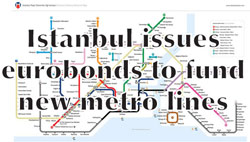 Istanbul issues eurobonds* after Istanbul issues eurobonds* afterdomestic banks stopped lending Istanbul, 6 December 2020: With Turkey’s state-owned banks unwilling to lend money to Istanbul, the country’s largest city, the Municipality announced on Friday (4 December 2020) that it had successfully sold US$580 million of eurobonds* to finance a number of infrastructure projects including four new metro lines. Istanbul Mayor Ekrem Imamoglu said at a news conference that during the last three months his administration had been had been in talks with international investors. “Our efforts have succeeded, and we have achieved issuing a eurobond to international markets to finance four metro lines.” Despite initial fear that the rivalry between the Mayor of Istanbul and Turkey’s President Tayyip Erdogan would impact negatively on the issuance, the bond was in fact 4.3 times oversubscribed. The $580 eurobond with a maturity of five years and 6.6 per cent yield saw demand of more than $2.4 billion. The Istanbul Municipality will use the funds to complete and start construction of four new metro lines with 39 new stations. The number of passengers using these lines every day is expected to reach five million. Mayor Imamoglu told financial journalists that the municipality only resorted to foreign financing after requests to obtain funds from Turkish state banks failed to produce results. In June 2019, Ekrem Imamoglu, from the main opposition Republican People's Party (CHP), inflicted a defeat on President Tayyip Erdogan's AK Party when he was elected mayor in the city. He is also seen by some as contender to challenge Erdogan in 2023 presidential elections. The Mayor informed journalists that after the election, Turkish state banks abruptly stopped extending loans to the municipality. Nevertheless, the Turkish finance ministry surprised financial markets when it granted permission for Istanbul to issue the eurobond. Istanbul hopes to return to the international markets in 2021 to raise further funds to finance investments in transport, water and waste disposal as well as earthquake preparedness. According to the Mayor, government approval has already been sought. *The eurobond is a type of bond that is issued in a currency that is different from that of the country or market in which it is issued. Despite its name, it has no particular connection to Europe or the euro currency. Due to this external currency characteristic, these types of bonds are also known as external bonds. The ‘euro’ in eurobond is meant to imply external. These eurobonds should not be confused with Eurobonds with a capital ‘E’. When capitalised, the word defines bonds issued by the European Union and European governments.  Brazil’s right-wing President faced Brazil’s right-wing President facedwith defeats in mayoral elections 30 November 2020: Mayoral elections held in Brazil over two rounds on 15 and 29 November 2020, saw candidates backed by the country’s right-wing President Jair Bolsonaro lose in the big cities. Only in Vitória, the capital city of the state of Espírito Santo, did a candidate supported by the Brazilian president win. The other big loser of the elections was the left-wing Workers Party (PT) of former President Lula da Silva. It failed to win a single state capital and took only four of 15 cities it contested. Its poor performance confirmed voters had not yet forgiven it for the economic recession and corruption scandals that marked the last of its 13 years in power. In contrast, other left-wing parties performed much better, capturing a number of important state capitals but alas not Sao Paulo, where the incumbent Mayor was re-elected. The big winners were the centre and centre-right parties that had seen their support plunge in 2018’s presidential election when their voters switched to President Bolsonaro, The elections in more than 5,000 municipalities are viewed as an important bellwether of the political climate in Latin America’s largest country ahead of presidential elections in two years. 2020 election results from Brazil’s state capitals
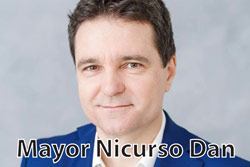 Former architectural activist Former architectural activistelected Mayor of Bucharest 5 October 2020: In last month’s Romanian local elections, the once mighty Social Democratic Party (PSD) suffered losses across the country. Romania’s ruling National Liberal Party (PNL) together with its ally, the Save Romania Union (USR) took control not only of Bucharest but also of the majority of provincial capitals. In Bucharest, Gabriela Firea, the incumbent mayor was convincingly defeated by Nicurso Dan. The new mayor, who stood as an independent, was supported by the National Liberal Party and Save Romania, a party he founded in 2015. Nicurso Dan first came to public attention in 2006 when he campaigned against the demolition of historic houses and the construction of high-rise buildings in some of the Romanian capital’s protected neighbourhoods. The USR also took control of two of Bucharest’s four district councils. One of the new USR mayors in Bucharest is Clotilde Armand, who was born in France, but now holds Romanian citizenship. The PNL, a centre-right conservative party, which governs the country in coalition with the centrist USR, took charge of 15 provincial capitals, while the party’s ally was victorious in four. The opposition Social Democrats remained the largest party in 13 provincial capitals. Social Democratic losses include the important Black Sea port of Constanta, where the incumbent mayor Deceal Fagadau lost to the PNL’s Vergil Chitac. In a historic development, voters in Romania’s third-largest city Timisoara elected a German national as its new mayor. Dominic Fritz, who was born in southern Germany’s Black Forest and, as a member of Germany’s Green Party, worked as chief of staff to the former German president Horst Köhler, defeated the incumbent PNL mayor, who was hoping to be re-elected to a third term. Mayor-elect Fritz, who holds no Romanian citizenship, is the first foreigner to be elected mayor of any city in Romania. However, he speaks fluent Romanian and holds a resident permit in Timisoara. Some 20 years ago, as a 19-year old, Fritz worked for some time as a volunteer in a Timisoara orphanage. According to European Union law, those with residency can vote and run for elections anywhere in the EU both in local and European Parliament elections. Timisoara has been selected as one of the European cities of culture for 2023. Voters now hope that the new mayor will be able to mobilise European funding. Timișoara - Romania’s 1989 revolution started in the city - has stagnated in recent years under the leadership of the outgoing mayor. In Bucharest, new Mayor Nicurso Dan has promised to invest in public transport, to restore and expand green spaces and to make the city more pedestrian-friendly. Public transport in the capital is poor and underfunded. Traffic congestion is arguably the worst in Europe outside Russia. Most importantly, however, Mayor Dan has vowed to bring full transparency to the way in which the city is run. Shortly after his victory was announced, he said that his first task would be to commission a full audit of City Hall. Romania’s next general election is scheduled to take place on 6 December of this year. 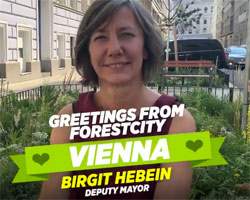 Austrians make fun of US President’s Austrians make fun of US President’sclaim of forest cities and exploding trees 18 September: Bemused by US President Donald Trump’s bizarre claim that Austrians lived in forest cities surrounded by exploding trees, Vienna’s deputy mayor Birgit Hebein released a humorous video, inviting the President to visit the Austrian capital. “You need not be afraid, our trees don’t explode.” But the deputy mayor also spoke of the progress made during the past two years in turning Vienna into a greener city. Her video, which she posted on Twitter, included before and after shots of various streets and squares where trees have replaced cars. On a visit to California, where wild fires have been raging for weeks, the American President downplayed the effects of climate change, claiming that Austrians who live in “forest cities” don’t have fires. Speaking to journalists, Donald Trump also reiterated an assertion that insufficient forest management was the main cause of fires. In 2018, when California faced another serious fire season, he said to have discussed “raking and cleaning” with the president of Finland, who later said he had no such recollection. There have been both serious and humorous conversations on social media about Trump’s 'exploding trees', as well as the fact that he claimed Austrians live within 'forest cities', which never catch fire. In an article for the London-based Independent, Austria’s agricultural minister, Elisabeth Koestinger, wrote. "As Austrians, fortunately blessed with a healthy sense of humour, we normally take such clichés about our country in our stride. However, the gravity of current events make Trump's words much more worrying - after all, right at this moment, thousands of people are fighting horrendous wildfires in life-or-death situations," the minister wrote. "In reality, Austria is a country situated in the heart of Europe, where people do not live in the forest, but rather with the forest and in a close, sustainable relationship with the natural environment," Koestinger explained to the American President. And to clarify: "No, we don't have any exploding trees in Austria.” This year’s wildfires are the most catastrophic to hit the western US states in living memory.  Supporters of poisoned Russian Supporters of poisoned Russianpolitician elected to city councils 14 September 2020: Political supporters of the poisoned Russian opposition politician Alexei Navalny, who is currently being treated in a German hospital, have claimed some successes in local and regional elections, held between 11 and 13 September 2020 in Siberia. Russians voted for provincial governors, regional parliamentarians and local councillors. Prior to being poisoned, Alexei Navalny went to Novosibirsk, Russia’s third-largest city and to the nearby university city of Tomsk, both in the southwest of the Siberian Federal District to encourage voters to cast their ballots ‘smartly’ by choosing candidates not belonging to the Kremlin party United Russia. The opposition's goal was to break the monopoly of power held by Russia’s governing party. The plan appears to have been successful in Tomsk (population 575,000), the city where Navalny was poisoned. United Russia lost ten seats and thus the majority on the city parliament with its 37 seats, but it remains the strongest faction. After the counting of all ballot papers, the ruling party in Russia achieved 24.5 per cent, securing 11 seats. A member of the Tomsk Electoral Commission told journalists that she could not remember the party of President Putin ever having done so badly in the 15 years she has been in office. The Communist Party came second with 17.5 per cent of the vote, followed by the New People party, which was only admitted this year. The new party, which promotes green issues, found a receptive audience among Tomsk’s academics and students as well as professionals. It achieved 15 per cent of votes cast. Two of Navalny’s employees were also elected to the city council. In Novosibirsk (population 1.6 million), Sergei Boiko the head of Alexei Navalny’s local office was elected to the city council. To counter United Russia and the Communist Party, Boiko created an opposition alliance, which put forward some 30 candidates for the city legislature. Meanwhile, United Russia chairman Dmitry Medvedev, a former Russian President and Prime Minister, praised his party’s electoral successes, saying it was heading for victory in regional legislatures. He claimed that all the party’s candidates for regional governors were elected in the first round of voting. A general election is scheduled to be held in Russia next year.  German cities are willing German cities are willingto accept Moria refugees but condemn European inaction 11 September 2020: After a number of fires almost totally destroyed Greece’s largest refugee camp on the Island of Lesbos, leaving more than 12,000 people without shelter, European institutions and national governments have been accused of gross negligence. Aid organisations have warned for some time that the conditions in the Moria camp and others in Greece had become intolerable and inhuman. “Instead of offering the mainly Syrian and Afghani refugees new homes across Europe, people were left to rot.” Financially stretched Greece has been unable to provide many basic facilities, including water, sanitation and heating. Visitors also commented Moria reminded them of a prison camp. Following the onset of the Covid-19 pandemic, refugees were only allowed to leave the camp in exceptional circumstances. While European national leaders continue to argue among themselves on how many refugees to accept, with some countries refusing to take any, German city leaders have written to Chancellor Angela Merkel that they are willing and capable of accepting refugees from the camps on Lesbos, including Moria. The mayors of Bielefeld, Düsseldorf, Freiburg, Giessen, Göttingen, Hannover, Cologne, Krefeld, Oldenburg and Potsdam wrote in their joint letter that they felt it to be their humanitarian duty to provide shelter to some of the 12,000 refugees. Göttingen’s Mayor Rolf-Georg Köhler said his city would welcome additional refugees and demanded that Europe lived up its proclaimed values. Freiburg, Germany’s most southerly large city, has since the refugee crisis of 2015 accommodated more than 5,000 refugees and immigrants. Now Mayor Martin Horn says, the city would be ready to accept more if only the federal government gave the green light. “Right now, we can only sit and wait until the German interior ministry allows more refugees to come to the country,” the Mayor said. Other cities in the federal state of Baden-Württemberg have also expressed their willingness to accept refugees from Greece. Fritz Kuhn, the Mayor of the state capital Stuttgart, said the city had already prepared reception facilities. Schwäbisch-Hall’s Mayor Josef Pelgrim called on German and European politicians to stop talking and start acting. Rottenburg, a town of less than 50,000 people, could easily take care of an additional 200 to 300 refugees, Mayor Stephan Neher said. The Mayor of Düsseldorf, the state capital of North-Rhine Westphalia, said the situation on Lesbos could not be toleralted. “For humanitarian reasons, we are of course ready to accept refugees from the Moria camp in Düsseldorf. I appeal to the federal government to allow these people to enter Germany as soon as possible,” Mayor Thomas Geisel added. Potsdam's Mayor Mike Schubert demanded that the German government should use its European Council Presidency to finally resolve the discussion on the distribution of refugees that has been ongoing for years. “These years of turmoil are evidence of the poor ability of European institutions to act. If you cannot agree on a common right to asylum in Europe, the European community of values is wasted,” the Mayor said. Mayor Schubert added that if there was no consensus among member states, there must be solutions where states that take in refugees are supported from the EU budget. "At the same time, those who disregard the right to asylum must be sanctioned for violating common European principles," demanded the Potsdam Mayor. German cities of Safe Harbours In June 2019 a number of German cities, including Berlin, Freiburg, Kiel, Krefeld and Rostock, founded the alliance ‘Cities of Safe Harbours’. In a declaration, the cities expressed their willingness to receive refugees rescued in the Mediterranean. The Alliance now claims a membership of some 100 German towns and cities, including: In Baden-Württemberg Freiburg, Heidelberg, Karlsruhe, Konstanz, Mannheim, Stuttgart, Tübingen, Ulm. In Bavaria Aschaffenburg, Erlangen, Munich, Nuremberg, Regensburg and Würzburg In Berlin Berlin In Brandenburg Potsdam In Bremen Bremen In Hamburg Hamburg In Hesse Darmstadt, Kassel, Marburg, Wiesbaden In Lower Saxony Braunschweig, Cuxhaven, Göttingen, Hannover, Hildesheim, Oldenburg, Osnabrück, In Mecklenburg Western Pomerania Rostock In North-Rhine Westphalia Bielefeld, Bochum, Bonn, Dortmund, Düsseldorf, Cologne, Krefeld, Münster, Recklinghausen, Solingen, Viersen In Rhineland Palatinate Kaiserslautern, Koblenz, Ludwigshafen, Mainz, Trier In Saarland Saarbrücken In Saxony Leipzig In Saxony-Anhalt Halle, Magdeburg In Schleswig-Holstein Flensburg, Husum, Kiel, Lübeck, Plön In Thuringia Jena, Weimar Follow @City_Mayors |