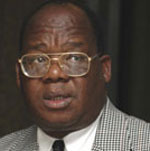
Amos Masondo, former Mayor of Johannesburg

FRONT PAGE
SiteSearch
About us
Directories

World Mayor
World index of mayors
Mayors from Africa
| Cape Town (English) | Cape Town (Español) | Durban |
Johannesburg | Rabat |
Mayors from Africa
Mayors from Asia & Australia
Mayors from The Americas
Mayors from Europe

City Mayors reports news from towns and cities around the world. Worldwide | Elections | North America | Latin America | Europe | Asia | Africa | Events |

Mayors from The Americas, Europe. Asia, Australia and Africa are competing for the annual World Mayor Award. More

City Mayors ranks the world’s largest as well as richest cities and urban areas. It also ranks the cities in individual countries, and provides a list of the capital cities of some 200 sovereign countries. More

City Mayors reports political events, analyses the issues and depicts the main players. More

City Mayors describes and explains the structures and workings of local government in Europe, The Americas, Asia, Australia and Africa. More

City Mayors profiles city leaders from around the world and questions them about their achievements, policies and aims. More

City Mayors deals with economic and investment issues affecting towns and cities. More

City Mayors reports on how business developments impact on cities and examines cooperation between cities and the private sector. More

City Mayors describes and explains financial issues affecting local government. More

City Mayors lists and features urban events, conferences and conventions aimed at urban decision makers and those with an interst in cities worldwide. More

City Mayors reports urban environmental developments and examines the challenges faced by cities worldwide. More

City Mayors reports on and discusses urban development issues in developed and developing countries. More

City Mayors reports on developments in urban society and behaviour and reviews relevant research. More

City Mayors deals with urban transport issues in developed and developing countries and features the world’s greatest metro systems. More

City Mayors examines education issues and policies affecting children and adults in urban areas. More

City Mayors investigates health issues affecting urban areas with an emphasis on health in cities in developing countries. More

City Mayors examines the importance of urban tourism to city economies. More

City Mayors examines the contributions history and culture make to urban society and environment. More

City Mayors describes the history, architecture and politics of the greatest city halls in the world. More

City Mayors invites readers to write short stories about people in cities around the world. More

City Mayors questions those who govern the world’s cities and talks to men and women who contribute to urban society and environment. More

City Mayors profiles national and international organisations representing cities as well as those dealing with urban issues. More

City Mayors reports on major national and international sporting events and their impact on cities. More

City Mayors lists cities and city organisations, profiles individual mayors and provides information on hundreds of urban events. More
Amos Masondo
Mayor of Johannesburg
By Andrew Stevens
12 January 2008: A veteran of the anti-apartheid struggle, Amos Masondo is the unified city of Johannesburg’s first elected mayor. Voted in to a second term of office in 2006, Masando is prioritising economic growth and tackling the AIDS crisis, as well as looking forward to hosting the 2010 FIFA World Cup. The mayor has been short-listed for the 2008 World Mayor Award.Update: Mpho Parks Tau is the current Mayor of Johannesburg
Born in 1953 and schooled in the Soweto township, Masondo took part as a student activist in the anti-Afrikaans disturbances of 1972 and was a member of Soweto cell of the African National Congress’ military wing, Umkhonto we Sizwe (‘Spear of the Nation’) from 1974. The group waged an urban guerrilla campaign against the apartheid state from 1961 until 1990. Masondo was jailed for anti-apartheid activities between 1975 and 1981 (held alongside the group’s co-founder Nelson Mandela at the infamous Robben Island maximum security prison). On his release he joined the General Allied Workers’ Union, becoming a full-time organiser in 1983, though he was placed in detention once more in 1985 under the country’s emergency regulations introduced to deal with increasing unrest.
Masondo was also a founder member of the United Democratic Front, a broad non-racial coalition against apartheid. On his release in 1989, he became regional secretary for COSATU, the trade union umbrella organisation and the ANC’s regional election coordinator. He retains influence as a prominent member of the ANC in his own right, holding national and provincial office. Masondo was elected to the Gauteng provincial legislature, serving as executive member for health and unsuccessfully contesting the election for premier in 1999 (but appointed political adviser to the victor), before becoming Johannesburg mayor in December 2000.
Under the apartheid system, Johannesburg, South Africa’s largest city, was divided into 11 local authority zones corresponding to racial lines, with the four majority black areas receiving the least resources. A city council was established in 1995, with a city manager hired in 1999 as part of an attempt to restructure city governance and address financial deficits in poorer zones. The city remains hugely divided on racial and economic lines, with the affluent white suburbs of the centre and north contrasted by the black townships to the south. The elected mayor and council system was introduced by Gauteng provincial government in 2000, with Masondo chosen by the ANC to become the first occupant of the post. In 2006, the city council restructured its administrative divisions once more, a reduction from 11 to seven and merged the posts of mayor and city manager. The city will host the 2010 FIFA World Cup, with the winning bid being declared in 2004. The city manager, reporting to the mayor, is responsible for overseeing preparation work for the tournament.
Elected to a second term of office in March 2006, Masondo has identified six priorities for his new term – economic growth and job creation; health and community development; housing and services; a safe, clean and green city; a well-governed and managed city; HIV and AIDs. In 2007 Masondo became co-president of United Cities and Local Governments.