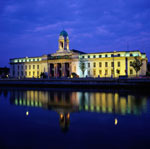
Cork City Hall at night

FRONT PAGE
Site Search
About us | Quiénes somos |
A propos de nous | Über uns |
Mayor Monitor
Directories
Events
Debate

City Halls: Europe
| Aachen | Antwerp | Athens | Berlin | Birmingham | Bolton | Bradford | Bremen | Brighton | Cardiff | Cologne | Cork | Dresden | Florence | Glasgow | Hanover | Innsbruck | Jena | Leeds | Liverpool | London | Manchester | Moscow | Munich | Neuss | Paris | Sheffield | Southampton | Stockholm | Stuttgart | The Hague | Vienna |
City Halls: The Americas
| Bogota | Boston | Buenos Aires | Chicago | Houston | New York | Philadelphia | Pittsburgh | San Francisco | Seattle | Toronto | Vancouver |
City Halls: Asia + Australasia
| Ekaterinburg | Sydney | Tokyo | Wellington |

City Mayors reports news from towns and cities around the world. Worldwide | Elections | North America | Latin America | Europe | Asia | Africa |

City Mayors ranks the world’s largest, best as well as richest cities and urban areas. It also ranks the cities in individual countries, and provides a list of the capital cities of some 200 sovereign countries. More

City Mayors profiles city leaders from around the world. More

City Mayors describes the history, architecture and politics of the greatest city halls in the world. More

Mayors from The Americas, Europe. Asia, Australia and Africa compete for the World Mayor Award. More

Use Mayor Monitor to rate the performance of mayors from across the world More

In your opinion: Praise Criticise. Write

City Mayors reports political events, analyses the issues and depicts the main players. More

City Mayors describes and explains the structures and workings of local government in Europe, The Americas, Asia, Australia and Africa. More

City Mayors deals with economic and investment issues affecting towns and cities. More

City Mayors describes and explains financial issues affecting local government. More

City Mayors reports urban environmental developments and examines the challenges faced by cities worldwide. More

City Mayors reports on and discusses urban development issues in developed and developing countries. More

City Mayors reports on developments in urban society and behaviour and reviews relevant research. More

City Mayors invites readers to write about the people in their cities. More

City Mayors examines city brands and marketing. More

City Mayors lists and features urban events, conferences and conventions aimed at urban decision makers and those with an interst in cities worldwide. More

City Mayors deals with urban transport issues in developed and developing countries and features the world’s greatest metro systems. More

City Mayors examines education issues and policies affecting children and adults in urban areas. More

City Mayors investigates health issues affecting urban areas with an emphasis on health in cities in developing countries. More

City Mayors reports on how business developments impact on cities and examines cooperation between cities and the private sector. More

City Mayors examines the contributions history and culture make to urban society and environment. More

City Mayors examines the importance of urban tourism to city economies. More

City Mayors questions those who govern the world’s cities and talks to men and women who contribute to urban society and environment. More

City Mayors profiles national and international organisations representing cities as well as those dealing with urban issues. More

City Mayors reports on major national and international sporting events and their impact on cities. More

City Mayors lists cities and city organisations, profiles individual mayors and provides information on hundreds of urban events. More
City Mayors reports news from towns and cities around the world. Worldwide | Elections | North America | Latin America | Europe | Asia | Africa |
City Mayors ranks the world’s largest, best as well as richest cities and urban areas. It also ranks the cities in individual countries, and provides a list of the capital cities of some 200 sovereign countries. More
City Mayors profiles city leaders from around the world. More
City Mayors describes the history, architecture and politics of the greatest city halls in the world. More
Mayors from The Americas, Europe. Asia, Australia and Africa compete for the World Mayor Award. More
Use Mayor Monitor to rate the performance of mayors from across the world More
In your opinion: Praise Criticise. Write
City Mayors reports political events, analyses the issues and depicts the main players. More
City Mayors describes and explains the structures and workings of local government in Europe, The Americas, Asia, Australia and Africa. More
City Mayors deals with economic and investment issues affecting towns and cities. More
City Mayors describes and explains financial issues affecting local government. More
City Mayors reports urban environmental developments and examines the challenges faced by cities worldwide. More
City Mayors reports on and discusses urban development issues in developed and developing countries. More
City Mayors reports on developments in urban society and behaviour and reviews relevant research. More
City Mayors invites readers to write about the people in their cities. More
City Mayors examines city brands and marketing. More
City Mayors lists and features urban events, conferences and conventions aimed at urban decision makers and those with an interst in cities worldwide. More
City Mayors deals with urban transport issues in developed and developing countries and features the world’s greatest metro systems. More
City Mayors examines education issues and policies affecting children and adults in urban areas. More
City Mayors investigates health issues affecting urban areas with an emphasis on health in cities in developing countries. More
City Mayors reports on how business developments impact on cities and examines cooperation between cities and the private sector. More
City Mayors examines the contributions history and culture make to urban society and environment. More
City Mayors examines the importance of urban tourism to city economies. More
City Mayors questions those who govern the world’s cities and talks to men and women who contribute to urban society and environment. More
City Mayors profiles national and international organisations representing cities as well as those dealing with urban issues. More
City Mayors reports on major national and international sporting events and their impact on cities. More
City Mayors lists cities and city organisations, profiles individual mayors and provides information on hundreds of urban events. More
Cork City Hall, a gesture of
reconciliation by the British
By Gregor Gosciniak
4 July 2007: Cork, founded as a monastic settlement by St Finbar in the sixth century, is Ireland's third biggest city after Dublin and Belfast. It is the principal city and administrative centre of Cork County, in south-western Ireland, as well as the biggest city of the Munster Province. The city has a population of some 119,000 inhabitants, about 190.000 people if Cork’s immediate suburbs are included. In 2005 Cork was the European Capital of Culture.
One of the most splendid buildings of Cork is it’s City Hall, a limestone structure which replaced the old City Hall, destroyed by British troops on 11th December 1920 in a event called 'The burning of Cork', which took place during the country’s War of Independence. The foundation stone of the new City Hall, which was build at the same place as the old building, was laid by the Executive Council of the State, Mr. de Valera, on 9 July 1932.
The complete cost of this new building was provided by the British Government in the 1930s as a gesture of reconciliation. The City Hall consists of three sections, two wings comprising the Municipal Offices and an assembly hall, capable of seating up to 1,300 people. In March 1935 the first staff members of a few departments of the city administration moved into the western wing of the building. The first council meeting was held in City Hall on the 24th April 1935. The building was then officially opened by the Irish President on 8th September 1936.
Cork City is an important European example of eighteenth century architecture, which has a very typical Georgian style. Therefore Cork City Hall was designed and built in the classical style. It is an imposing and dignified structure and, with its long main front dominating the river, immediately attracts attention due to the excellence of its proportion and the simplicity of its treatment.
The facades are of dressed limestone from the Little Island Quarries. In connection with the stone work, which is a feature of the structure, one may perhaps specifically refer to the columns of the Doric order that grace the main and subsidiary porticos. The main entrance to the offices is through a marble-paved vestibule leading to the main staircase. The stairs are of polished marble and the balustrade of ornamentally hammered wrought iron.
On the first floor over the entrance are the principal departments which form the Lord Mayor's suite. The Council Chamber on the opposite side of the corridor is approached through a lobby. It is well designed, being both lofty and spacious. It receives natural light from an ornamental dome. Galleries have been provided for distinguished visitors and the general public. Here much freedom has been displayed both in the decorative and plaster work and in the balustrade, with the walls being paneled in mahogany. The furniture of the council chamber is also of mahogany made to the architect's specifications.
Cork City Hall houses the office of Mayor Councilor Michael Ahern, who was elected Lord Mayor of Cork at the Annual Meeting of Cork City Council on 26th June 2006.